Why Halo-Halo Will Never Go Out of Style
Food trends come and go — often loudly, often fleetingly. The world is constantly searching for what’s next: charcoal cones, mochi doughnuts, ube croissants. These flavors pass through Instagram feeds like seasons. Some last a month. A few, a year. And yet, in the heart of the Philippines, in neighborhoods big and small, one dessert continues to appear on tables, in street carts, in cafés and family gatherings — unchanged in soul, if not in style. Halo-halo is still here. And it always will be.
A Dessert That Refuses to Disappear
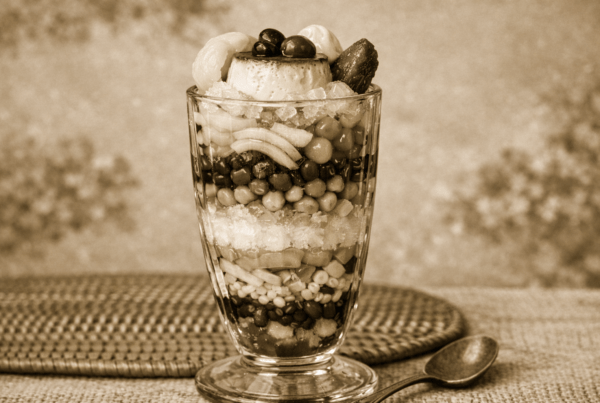
At first glance, halo-halo might seem like a chaotic dessert. Shaved ice. Milk. Bananas. Purple yam. Corn. Flan. Jelly. It doesn’t strive for elegance or neatness. It has no delicate plating or dainty proportion. It isn’t meant to impress with its polish. But to Filipinos, this cup — humble, colorful, unpredictable — is a culinary heirloom. Something you didn’t just grow up eating. You grew up with it as part of your life.
- You didn’t learn it from a cookbook.
- You learned it from watching.
- You didn’t order it — you waited for it.
- You didn’t analyze it — you felt it.
The ice melting too fast in the tropical heat. The sound of metal spoons scraping plastic cups. The first cold shock of ube and leche flan. The grain of crushed ice between your teeth. The final sweet sip at the bottom of the cup — when the milk turns violet.
These are not trends. They are rituals.
More Than a Mix — A Mirror
The magic of halo-halo lies not only in how it’s made but in what it reflects. Each serving tells a story of Filipino identity: layered, mixed, shaped by centuries of adaptation. Spanish flan. American milk. Japanese ice techniques. Local fruit and sugarcane, rooted in the land.
It’s a metaphor too perfect to ignore: halo-halo, literally “mix-mix,” is the national dessert of a people who themselves are mixed — by geography, history, language, and spirit.
Where other cultures strive for purity, Filipinos have always embraced complexity. We don’t erase ingredients. We layer them.
That’s why halo-halo lasts. It speaks our language. And when served right — with reverence, not rush — it reminds us who we are.
The Quiet Strength of Slowness
In today’s digital world, where every dessert is engineered for shock value and shelf life, halo-halo refuses to change its pace. It asks you to wait. It asks you to stir. It asks you to slow down — and in doing so, it reminds you what food can still be. Where modern sweets are built for performance — neat angles, symmetrical portions — halo-halo is made to collapse. That’s the point. Its moment of truth doesn’t come when it’s handed to you, but when you take that long spoon, dig from the bottom, and create your own story.
There is no “perfect bite.” There are a hundred. It’s messy, and honest, and deeply personal — just like every meaningful food memory.
Carried by Generations, Reimagined with Care
You don’t need to reinvent halo-halo to keep it alive. You only need to remember it well.
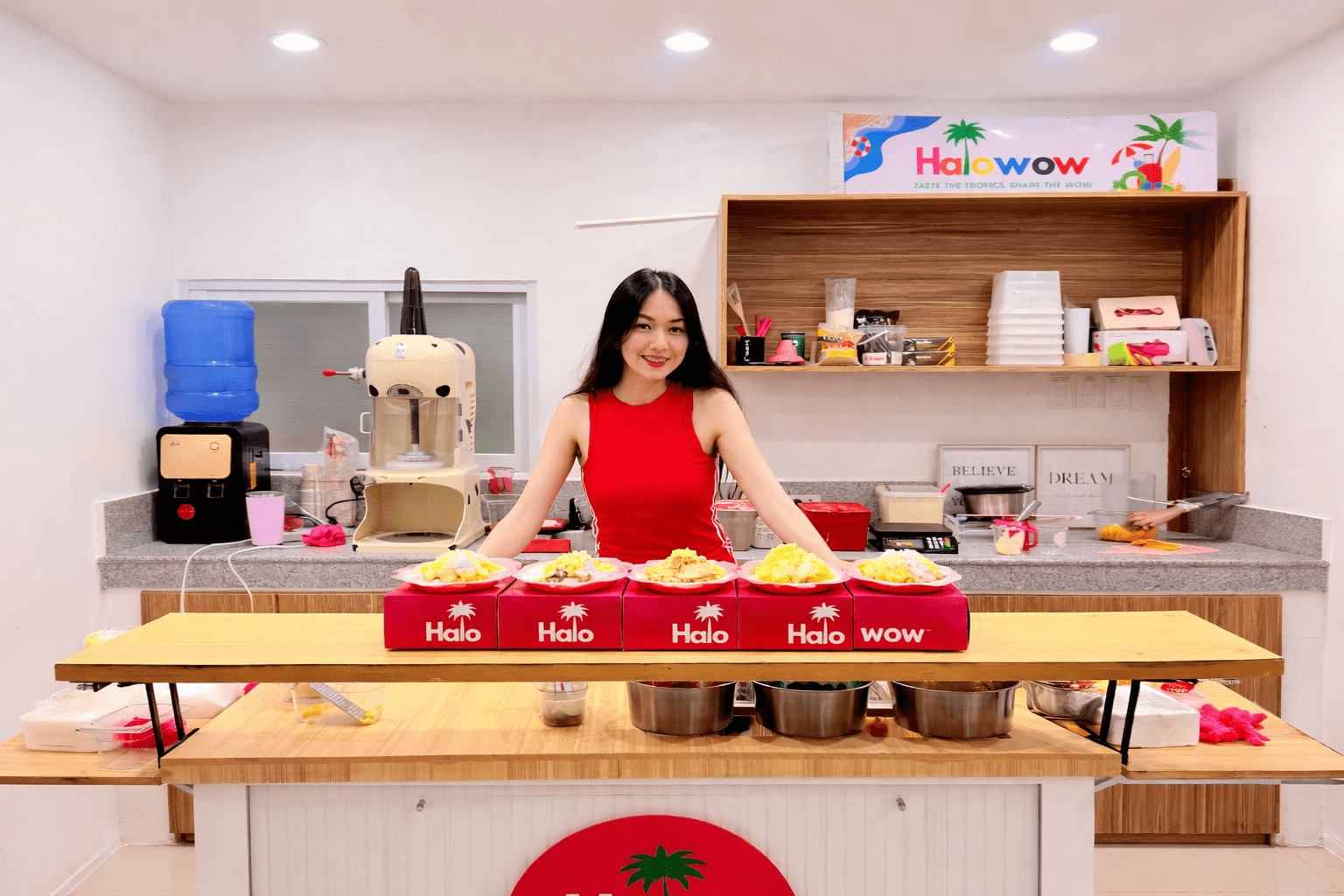
That’s the philosophy behind Halowow — a modern-day revival of a traditional dessert that, if we’re not careful, risks being flattened into fast food. At Halowow, halo-halo is not a product to be pushed. It’s a story to be shared. By choosing restraint over excess, balance over bravado, and heart over hype, Halowow has reminded Filipinos that this dessert was never meant to be improved. Only respected.
The texture, the proportions, the local ingredients — each is an homage to the halo-halo that came before, but made with the care of a new generation: mindful of heritage, open to refinement, always rooted in realness. And it’s working.
What Halowow’s founders understand — and what every bite confirms — is that halo-halo has outlasted every trend not by adapting to the world, but by staying true to the world it came from.
Halo-Halo Abroad, Still at Home
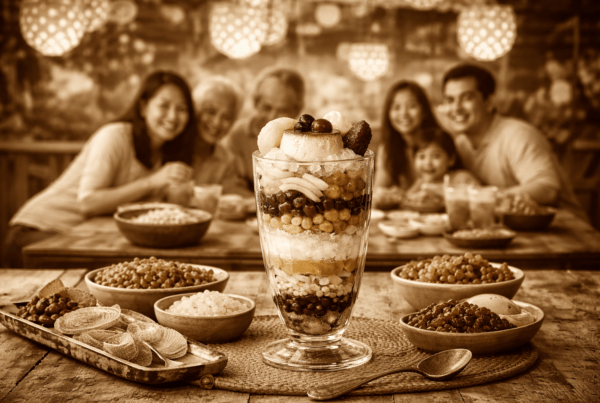
In diaspora communities around the globe, halo-halo is doing what it has always done: bringing Filipinos together. It appears at community events in Dubai, at summer festivals in Toronto, in cafés across Los Angeles and Sydney — always humble, always loved.
It becomes more than dessert. It becomes language, bridge, balm. For second-generation Filipinos, it is often the first thing they recognize. The first thing they crave. The first thing they understand instinctively.
“I didn’t grow up in the Philippines,” one Halowow customer shared. “But when I tried their halo-halo, I felt like I had.”
That is the staying power of halo-halo. It doesn’t just outlast trends. It transcends distance. It brings home closer — even when home is oceans away.
What Halo-Halo Gives Us
More than sugar, more than coolness, more than color — halo-halo gives us:
- Continuity, across generations
- Context, in an increasingly homogenized world
- Comfort, in times of uncertainty
- Connection, to culture, family, and memory
As long as Filipinos remember who they are, halo-halo will remain part of the story. Because it has always been more than a dessert.
It is a ritual we never stopped needing.
And Why It Will Always Matter
When the world tires of fleeting flavors, halo-halo will still be here — layered, bright, bold, and quiet. A dessert that refuses to be trendy because it has already become timeless.
- And so we stir.
- And we taste.
- And we remember.
- And we pass it on.
Because some things — the important things — never go out of style.