From Family Table to Food Icon: The Filipino Halo-Halo Legacy
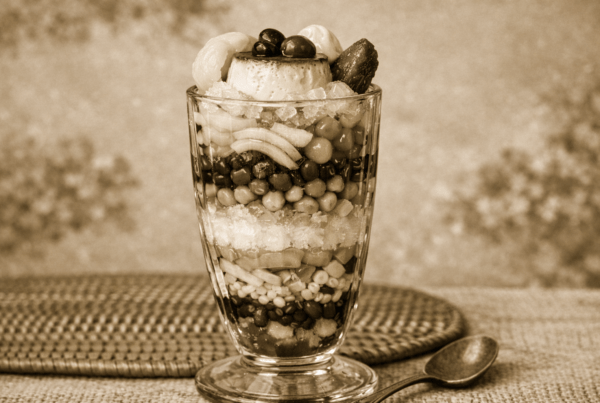
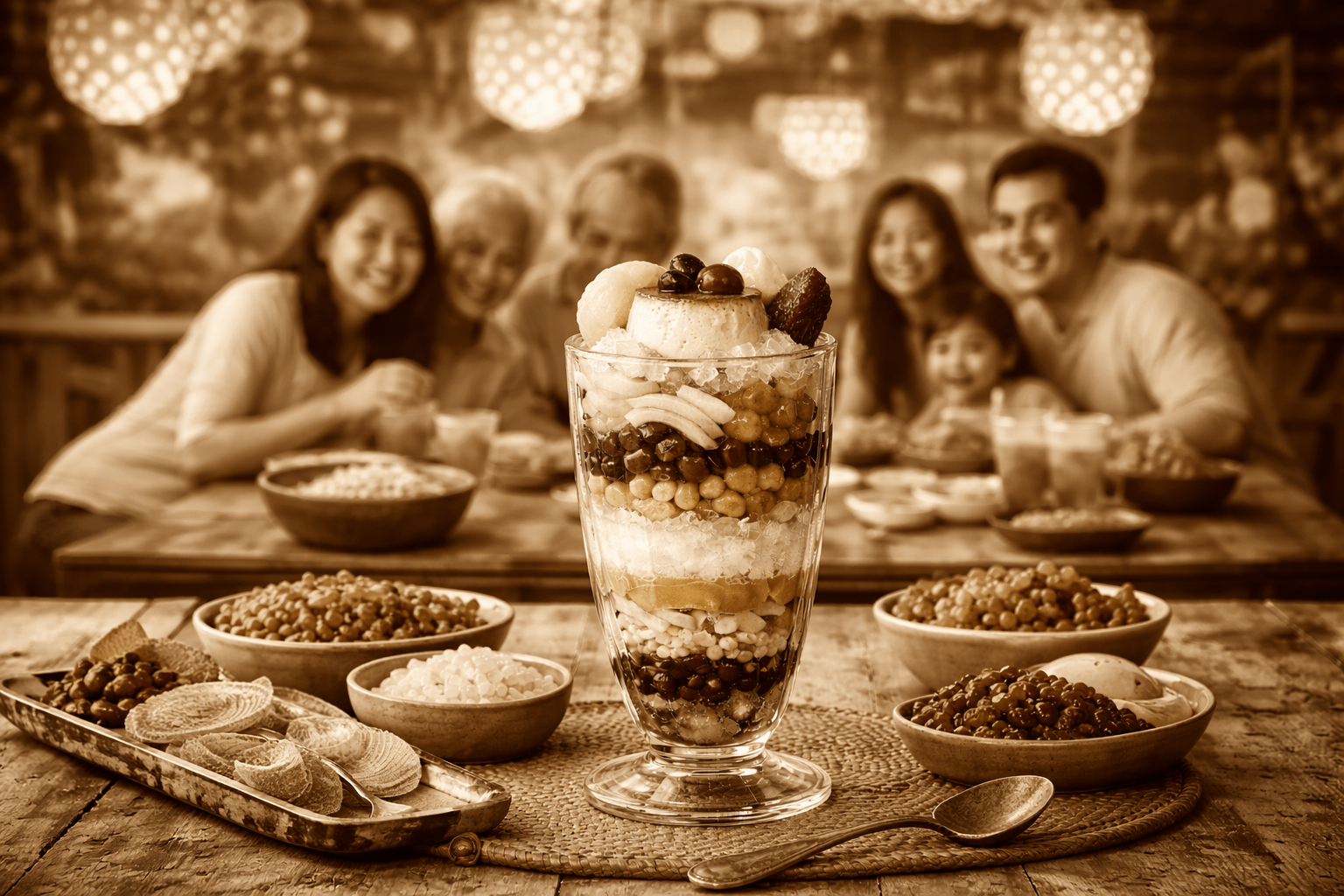
Before it appeared on menus, before the chains and cafés, and before Instagram turned it into an aesthetic, Halo-Halo lived on family tables. It was not styled. It was not branded. It was simply made—with care, from memory, for moments that mattered.
Every household had its own version. In some homes, it was modest: just three ingredients, crushed ice, and milk. In others, it was elaborate: a dozen elements lined up on the table like ritual offerings. What unified these versions wasn’t how they looked—but how they made you feel.
In those kitchens, children grew up with sticky fingers, cold lips, and wide eyes. They watched their elders build towers of flavor from humble ingredients. They learned patience, timing, and proportion—not from recipes, but from repetition. Halo-Halo was passed down like a family story: always the same at its core, always slightly different in the telling.
Over time, what began as a homemade tradition became a public obsession. Halo-Halo transitioned into restaurants and food stalls, each adding its own flourish. Some focused on texture, some on sweetness, some on innovation. But beneath the commercial rise was a cultural reality: Halo-Halo had become an icon, a dessert so embedded in the Filipino psyche that it could now represent the nation itself. And like all icons, it adapted. Overseas, it appeared in pop-ups, Filipino-American cafés, and dessert bars that sought to reintroduce it to a curious audience. It survived globalization not by conforming, but by staying personal. Its appeal never relied on uniformity. It thrived because it felt real.
To call Halo-Halo a “legacy” is not to exaggerate. It is a living tradition—a thread that ties together generations. It is the bridge between provinces and cities, between past and future. And as it grows in recognition, its role deepens. It doesn’t just represent a dessert category. It represents the very way Filipino families transmit love.