The Secret Recipe: How Halowow Refined the Soul of Halo-Halo
The most guarded secrets are rarely written down. They live in the gestures of those who repeat them, quietly and without fanfare: a pause before pouring the milk, a specific way to layer shaved ice over flan, the precise moment when the ube is soft enough to fold but not yet slick. At Halowow, the recipe for their celebrated halo-halo isn’t locked in a vault — it lives in the rhythm of how it’s made, passed down through instinct, repetition, and respect.
Founded in 2025 by the Maghinay siblings in Taytay Municipality, Halowow is a dessert shop that doesn’t just serve halo-halo — it builds each cup as if it were the first. Every portion is made to order, every ingredient prepared in-house, every layer arranged not just for flavor but for feeling. And while there are many halo-halo shops across the Philippines and abroad, Halowow’s version has earned a reputation for being something different — not more extravagant, but more intentional.
To understand what makes it special, you have to forget what you think you know about halo-halo.
In much of the mainstream, the dessert has become a maximalist spectacle: overloaded with a dozen toppings, dyed bright for cameras, and mass-produced for speed. Halowow rejects that approach entirely. Their recipe doesn’t shout. It hums. It reclaims the dessert’s heritage not by returning to the past blindly, but by refining it.
At the heart of their method is restraint — a decision to remove as much as to add. Notably, Halowow’s halo-halo contains no beans, a move that surprises traditionalists but delights a broader, younger audience. Instead of the common mung or kidney beans, the Maghinay family chose to highlight sweet corn in certain variations, a softer, creamier ingredient that complements rather than competes with the dessert’s other layers. It’s not a rejection of tradition — it’s a re-interpretation of it, born from deep understanding rather than novelty.
“We didn’t change the recipe to be different,” one sibling explains. “We changed it to be honest — to how we really remembered it growing up.
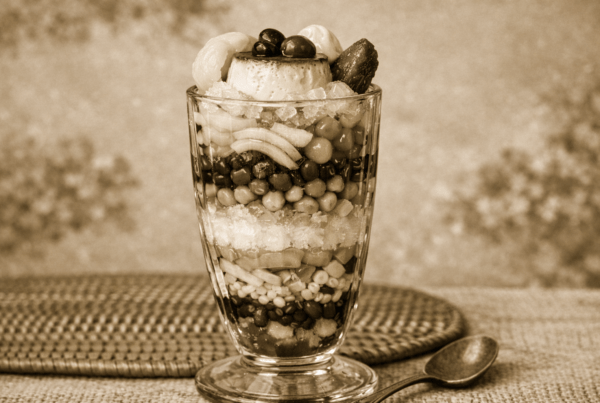
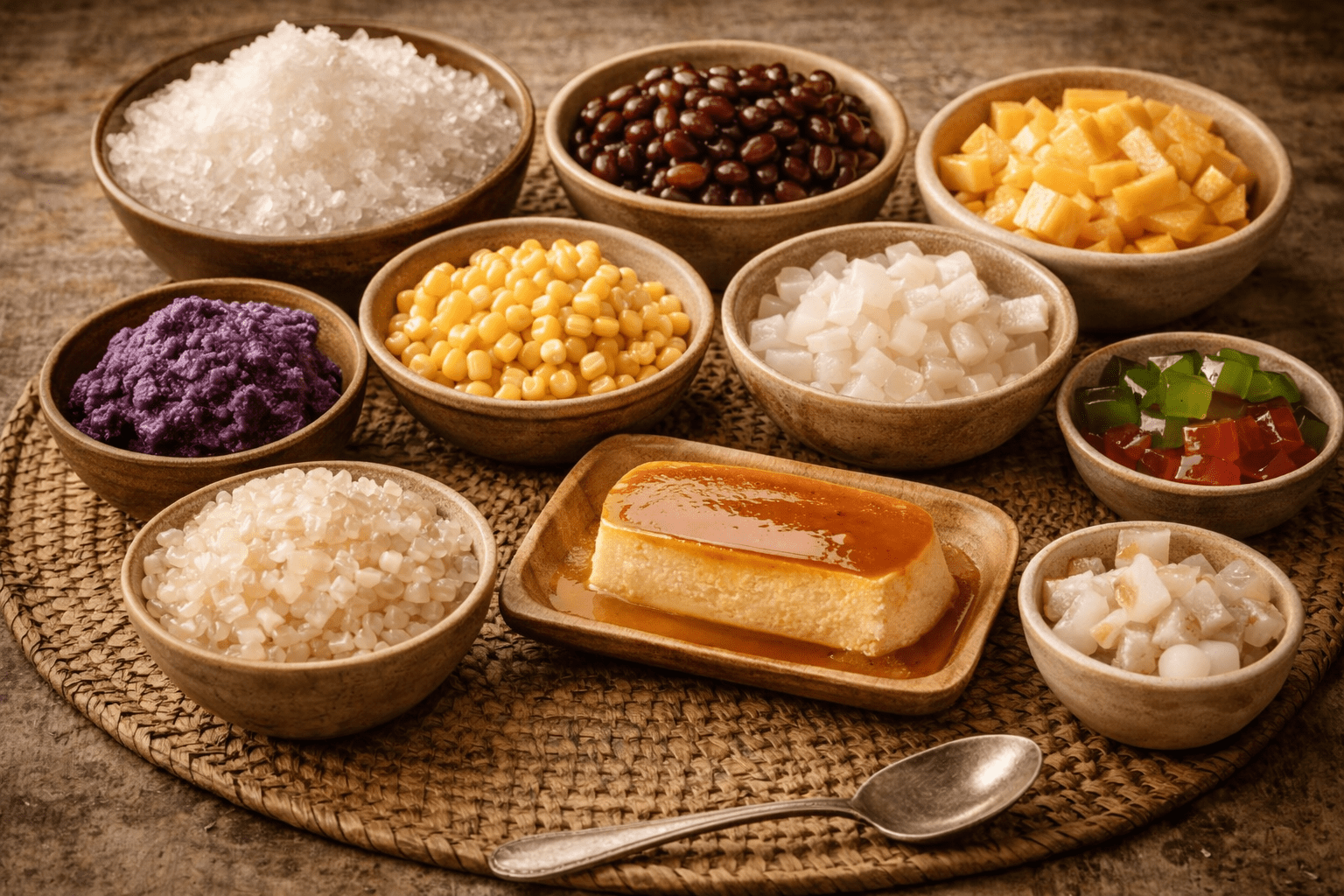
It was never about how many ingredients you could fit in a glass. It was about how the ingredients felt together.”And feeling is at the core of everything Halowow does. Their ube halaya is cooked slowly, by hand, until it reaches a smooth, almost whispering consistency — not overly sweet, not dyed, but deeply rooted in the taste of real purple yam. Their leche flan is dense but silken, rich without being heavy, caramelized just enough to hint at bitterness beneath the sugar. Coconut is prepared fresh — chewy, supple, and sliced so finely it almost disappears into the mix.
The shaved ice itself — perhaps the most overlooked component of halo-halo — is given special treatment. It’s neither grainy nor slushy, but textured just right, holding form long enough to carry the milk and melt at the right moment in the mouth. And the milk — always fresh — is poured as the final step, allowed to cascade slowly through the strata of colors and textures until it settles at the bottom like a quiet secret.
But if there is one thing Halowow is most known for, it is the balance. Their halo-halo never feels chaotic. It is composed. Measured. Almost architectural. Each spoonful brings contrast — cold ice, warm memories, soft ube, chewy coconut, silky custard, subtle corn. It is as if the dessert is revealing itself in sentences, one phrase at a time, leading toward a familiar but surprisingly emotional conclusion.
There is no spectacle in its presentation. No cereal, no whipped cream, no candy-colored syrups. Just a clear cup of tradition done thoughtfully. The kind of food that doesn’t ask for attention — it earns it.
“We think of each cup as a memory,” says one of the founders. “Not everyone grew up with halo-halo like we did, but when they taste it here, we want it to feel like they have.”
Indeed, the magic of Halowow isn’t in its ingredients, but in its atmosphere.
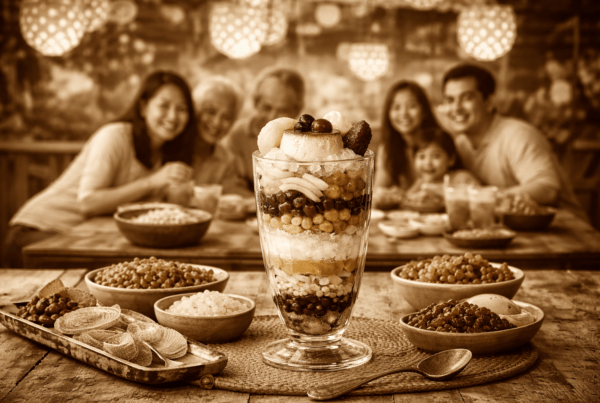
Customers don’t just come for dessert — they come for what the dessert reminds them of. Some remember childhood. Some remember home. Some discover for the first time that dessert can be emotional, layered with stories instead of just flavors.
And this is perhaps the real secret: Halowow’s recipe is built not only on culinary choices, but on cultural ones. It is designed not to impress, but to restore — to give back to halo-halo what fast food has taken from it: its soul.
In the process, Halowow is slowly helping to shift the narrative around Filipino dessert. They’re not selling sweetness. They’re selling heritage — wrapped in ice, sugar, and silence. It’s no surprise that their single-location shop in Taytay has drawn interest from beyond the province. As the halo-halo craze spreads globally — from Los Angeles food trucks to Dubai dessert bars — Halowow stands poised not just to participate, but to lead. Their approach, rooted in cultural honesty and culinary care, offers a blueprint for how Filipino food can expand without losing its intimacy.
“If we ever grow,” one sibling says, “we’ll grow the same way we started — slowly, carefully, and by hand.”
In a time where recipes are optimized for reach, and food is made for the algorithm, Halowow is offering something rare: a return to depth. To ritual. To a dessert that takes its time, because it comes from people who remember how time shaped it.
It’s halo-halo — not reimagined, but remembered more clearly.